
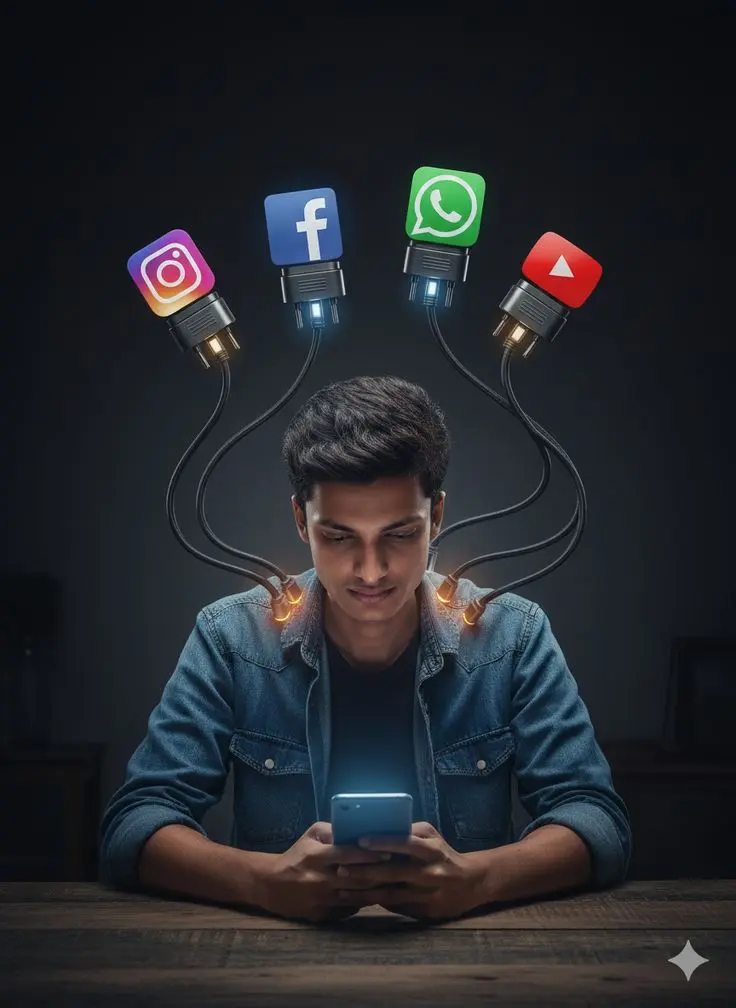
Be honest , how many ads did you scroll past today without noticing? And how many actually made you pause, watch, maybe even click?
That tiny pause isn’t random ,it’s psychology in motion. Great ads don’t yell or beg for attention; they interrupt autopilot, spark curiosity, and offer quick emotional relief.
In today’s attention economy, marketers aren’t fighting competitors, they’re fighting distractions. Every scroll, tap, and glance is a battle for brain space.
Below are five proven psychological triggers you can use to craft creatives that stop thumbs, win hearts, and drive real results whether you’re a D2C startup in India or a global brand running international campaigns.
1️. Pattern Break: Disrupt Autopilot in Two Seconds
Why it works
Our brains are wired for efficiency. When everything looks and sounds the same, the mind filters it out automatically. But when something breaks that pattern, an unexpected visual, phrase, or perspective the brain jolts awake: “Wait, what’s that?”
How to use
Open with something unexpected. Use a bold point of view, a sudden camera shift, or a surprising statement.
Reveal the after before the before , it sparks instant curiosity.
Example:
Instead of “Introducing our new serum,” try:
👉 “POV: You’re 32, and your skin just realized you still use hostel soap.”
It’s funny, relatable, and emotionally charged , the perfect attention jolt.
2️. The Zeigarnik Effect: Keep Them Watching with Open Loops
Why it works
The human brain hates unfinished stories. When you start a loop, it instinctively seeks closure. That’s why cliffhangers in shows keep us bingeing , and why tension works so well in ads.
How to use
Start with an incomplete or curiosity-driven statement:
- “This one mistake cost us ₹12,40,000 in 3 weeks.”
- “Every gym is hiding this from you.”
Hold the reveal for a few seconds. The first line’s only job? Make them need the second.
3️. Social Proof = Safety
Why it works
Buying online triggers subtle fear — “Will this really work? Can I trust it?”
Seeing real people succeed removes that fear. Social proof tells the brain: “Safe to proceed.”
How to use
Show authentic, unpolished proof:
- Real customer messages (blur names)
- Short UGC clips or selfie testimonials
- Screenshots of reviews or orders
- Before/after photos with timestamps
The less polished it feels, the more believable it becomes.
Example:
A mini-carousel of WhatsApp DMs:
“Bro, this actually worked in 2 days
Real emotion. Real proof. Real trust.
4️. Emotional Urgency Beats Logical Benefits
Why it works
People rarely buy with logic they buy to escape discomfort or gain relief.
Specs are forgettable. Emotions are not.
How to use
Translate features into feelings.
- Feature: “30-minute doorstep AC repair anywhere in Pune.”
- Emotion: “It’s 38°C. Your AC just died. We’ll reach before your chai cools.”
That’s not a service promise that’s emotional rescue.
Tip: Use relatable moments of tension your audience faces daily heat, stress, self-doubt, or time pressure.
5️. Clear Path to Relief (Remove Friction)
Why it works
Even when interest is high, buyers hesitate if the next step feels unclear or effort-heavy. The brain prefers simple, obvious actions.
How to use
Answer these silently for your viewer:
- What should I do next?
- How long will it take?
- Will it be annoying?
Swap generic CTAs like “Sign up now” for lighter, zero-pressure actions:
- “Send ‘AC’ on WhatsApp. We’ll handle it.”
- “Tap ‘Get Offer’ — no payment now.”
In India, chat-first flows (WhatsApp, Instagram DM) often outperform forms or checkout pages they feel human, fast, and familiar.
Why This Works: It’s Science, Not Luck
People aren’t tired of ads, they’re tired of lazy ones.
Attention isn’t bought; it’s earned through empathy and insight.
When you use these five triggers
Pattern break
Open loop
Social proof
Emotional urgency
Clear action
you create ads that feel human, not manipulative. You engage both the rational and emotional brain, the combo that drives decisions.
Stop the Scroll, Start the Connection
The best ads don’t trick people; they understand them.
Use these five triggers not to manipulate, but to make your message meaningful. Because when you speak to the human brain with honesty and clarity, you don’t just win clicks you win trust.
And in digital marketing, that’s the ultimate currency.